Show support, Join us on Facebook!

Lately we created a facebook fanpag for all of us, where we can easily share our ideas and have some fun! :)

Free Ebook, Recommended for Beginner

Read Ebooks about keeping a tarantula so you will be guided accordingly =) Knowledge is power

Top 15 must know about tarantulas!

Did you know that tarantulas can grow back their leg if its lost? Read more amazing facts about tarantulas!

Show support, Join us on Facebook!

Lately we created a facebook fanpag for all of us, where we can easily share our ideas and have some fun! :)

This is default featured slide 5 title

So if you are new to the hobby better consider my top 10 list. before i made this list, what i considered is their Looks, Temperament, size and their Price.

Showing posts with label Caresheet. Show all posts

Tuesday, April 22, 2014

Basic setup for Brachypelma Species

 NOTE: This guide is for Brachypelma Juvies upto adults

Basic needs of your Brachy:

* Hide
* Water Dish
* Dry Substrate, Misting
* Decorations =)

Hide

Hides are essential on almost all Tarantulas, when they are stressed or threatened by us they only have two things in mind and that is Fight or Flee. You dont want your T to run outside its enclosure right? so better give them some hides to retreat when threatened.

Coconut shell, Broken pot or anything will do as long as they can hide inside

Water Dish
Brachypelma species loves to live in dry substrates which makes them rely on their food for water, so we need to provide them to water dish so they can drink if they need to and to avoid Bad molts which can cause death to our T. Water Dish also raises humidity in the enclosure of our tarantulas which aids them in molting.

Dry Substrate and Misting
Almost all Brachypelma Species are found in mexico which has a cool to hot climate so in setting up the enclosure for your brachys you need to keep their substrate dry.
although some Species needs to have a higher humidity try misting the other side of its substrate

Decorations
 Of course we like to make the enlosures of our tarantula to stand out and be as attractive/cool as possible so we need to decorate it, common decorations used are:
Bones,
Skulls,
Driftwoods
Stones
As of now we dont have this on our for sale Section, but you can find some on your backyard if none then just be creative!

 BTW i do not suggest this setup (too many branches Standing) Brachypelma species are terrestrials so they stay most of the time on ground not climbing like the arboreals


Thats the basic needs of your brachypelma buddy, so Good luck! happy invert keeping! :3

Monday, April 21, 2014

Psalmopoeus Pulcher - Panama Blond tarantula

This tarantula is best for hobbyist who are new in keeping arboreal tarantulas, Most who owns one of this spider observed that upon reaching a size of 2" above, this tarantula tend to display itself outside from its hide making it ideal for beginners (most beginners like to see their spiders)
Tarantula Information
Regions Found:Panama
Class:Arboreal
Longevity:--
Adult Size:5++inch
Temperament:Skittish, aggressive when matured
Urticating Hairs:NO
Venom Potency:--
Poecilotheria Metallica Housing Requirements
Tarantula Housing:Height is much more important than floor space, a substrate should be provided with a variety of plants and branches. Ensure branches are in a stable position and will not fall if the tarantula climbs onto it.
Temperature:22-26°C (71.6-78.8°F)
Humidity:65-75%
Special Requirements:Hides,
Poecilotheria Metallica Diet
Livefood insects such as cricketsmealwormssuperwormshouseflies and other Small insects

Wednesday, April 16, 2014

Ceratogyrus sanderi (Namibia horned baboon)

Ceratogyrus sanderi or the Namibia horned baboon tarantula can be taken cared just like how C. darlingi is.
Sandy horned baboon tarantula loves to stay on its burrow so make sure that it has a deep substrate around (3-6inches) depends on how big your specimen is, Also, make sure that you try to keep their substrate dry
. This tarantula is very defensive so always treat yours with respect to avoid casualties.

Tarantula Information
Regions Found: Namibia
Class:Old world 
Growth:Fast Grower. 1 year to reach adult
Adult Size:3-3.5" For male 4-4.5+" for females
Temperament:Very Defensive
Urticating Hairs:No.
Venom Potency:Same as a bee sting
Selenobrachys philippinus Housing Requirements
Tarantula Housing:Floor space is more important than height, a deep substrate (4-5inches) should be provided for burrowing. A good retreat is required.
Temperature:23-30°C
Humidity:Low 60-70%
Special Requirements:Deep dry substrate for burrowing
Selenobrachys philippinus Diet
Livefood insects such as cricketsmealwormssuperwormshouseflies and other Small insects

Sunday, February 10, 2013

Haplopelma lividum (Cobalt Blue tarantula)

Known as the Cobalt Blue Tarantula, or more realistically a pet hole, this species tends to spend much of its time underground in self built burrows This 2.5 inch bodied tarantula with a leg span of 4-5 inches has to be one of the most beautiful, yet aggressive species of tarantula. While spiderlings, their overall color is a greyish blue. Adults on the other hand look dark brown-black at first glance. With the correct lighting you will see the legs have lovely blue sheen and the coxae is sliver. The males tend to be smaller and more brownish in color. Immature specimens are less blue and the abdomen is lighter in color.

Tarantula Information
Regions Found:Myanmar/Burma, Thailand, Vietnam, Laos and Cambodia
Class:Terrestrial
Longevity:Fast grower, --
Adult Size:4.5-5inches+
Temperament:Very defensive and sometimes Aggressive
Urticating Hairs:no
Venom Potency:Strong venom
Haplopelma lividum Housing Requirements
Tarantula Housing:Floor space is more important than height, a deep substrate should be provided for burrowing. A good retreat is required, maybe a few in strategic places.
Temperature:28-32°C
Humidity:75%
Special Requirements:Humidity needs to be increased near a moult to prevent problems
Haplopelma lividum Diet
Livefood insects such as cricketsmealwormssuperwormshouseflies and other Small insects

Friday, February 8, 2013

Selenobrachys philippinus (Philippine Orange Tarantula)

Selenobrachys philipinus or the Philippine Orange Tarantula, this specie is only found on Panay and Negros Island., this is the most beautiful tarantula that can be found at Philippines, this specie is known to be a burrower.

Tarantula Information
Regions Found: Panay, Negros Oriental, Philippines
Class:Old world
Longevity:Fast Grower, 2-4years
Adult Size:5-6inches
Temperament:Very Defensive
Urticating Hairs:No.
Venom Potency:Same as a bee sting
Selenobrachys philippinus Housing Requirements
Tarantula Housing:Floor space is more important than height, a deep substrate should be provided for burrowing. A good retreat is required.
Temperature:24-28°C
Humidity:High
Special Requirements:Slightly damp Substrate
Selenobrachys philippinus Diet
Livefood insects such as cricketsmealwormssuperwormshouseflies and other Small insects

Ceratogyrus darlingi (African Rear horned baboon)

Known as the Horned Baboon Tarantula, are great species of tarantula having a horn like bulge on its carapace just like other "Ceratogyrus" tarantulas Like the Ceratogyrus Marshalli. They are generally an all over brown colour and are known to be aggressive. Respect your tarantulas specially the aggressive ones so that you wont be bitten.

Tarantula Information
Regions Found: Mozambique and Zimbabwe (East Africa)
Class:Terrestrial Likes to burrow
Longevity:Fast Grower, 2-4years
Adult Size:4-5inches
Temperament:Aggressive Defensive
Urticating Hairs:No.
Venom Potency:More Toxic than most tarantula (Be Carefull)
Grammostola pulchripes Housing Requirements
Tarantula Housing:Floor space is more important than height, a deep substrate should be provided for burrowing. A good retreat is required.
Temperature:24-28°C
Humidity:About 75%
Special Requirements:No special requirements.
Grammostola pulchripes Diet
Livefood insects such as cricketsmealwormssuperwormshouseflies and other Small insects

Saturday, January 26, 2013

Got no feeders? No problem! catch some!

Cant feed your tarantulas just because you ran out of  feeders?
Dont worry! all you need is some fruit and "Diskarte" :)

Try catching some Fruit Fly :)
well, may sees them gross but my tarantulas love them and these fruitflly are Gutloaded! :) I let them eat some fruits before i catch them :)

Here is a simple picture of my Fly Catcher v1.0.0

I used ripe mango as bait for these flies and they just cant resist its sweet scent then the plastic to catch them. I just folded it twice to give a circular opening for flies to get trapped. Then, I just tied the plastic to the stick and leave it for a while and wait for some Fruit fly (I tied the plastic so that the fly will get used with the plastic above him/her.
Then if some flies are in below the plastic slowly, lower your plastic and trap the fly :)
Then the last thing you should do is to Break its wings. One wing will do, it can no longer fly.
Then say Bon Appétit to your Tarantula =)

Tuesday, January 22, 2013

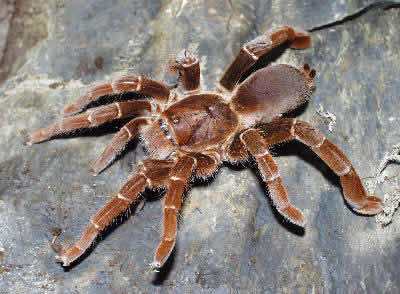
Pelinobius muticus (king baboon)

Pelinobius muticus (King Baboon Tarantula) This slow growing species takes 8 years to reach maturity and is a member of Eumenophorinae in the family Theraphosidae known commonly as the King Baboon Tarantula. It is native to East Africa in dry Acadia scrubland regions of Kenya, Tanzania, and Uganda and can be found in deep burrows at the base of Acadia bushes. The venom from King Baboon Tarantulas are said to be more toxic than most other tarantulas, which makes it more qualified to be kept by experienced hobbyists, and not beginners.

Tarantula Information
Regions Found: Kenya, Tanzania, and Uganda in dry acadia scrublands.
Class: Terrestrial Likes to burrow
Longevity: Slow growing taking 8 years to reach maturity
Adult Size: 7-9inch
Temperament: Aggressive Defensive
Urticating Hairs: No.
Venom Potency: More Toxic than most tarantula (Be Carefull)
Grammostola pulchripes Housing Requirements
Tarantula Housing: Floor space is more important than height, a deep substrate should be provided for burrowing. A good retreat is required.
Temperature: 24-30°C (71.5-86°F)
Humidity: About 75%
Special Requirements: No special requirements.
Grammostola pulchripes Diet
Livefood insects such as cricketsmealwormssuperwormshouseflies and other Small insects


Saturday, January 19, 2013

Poecilotheria Metallica (Gooty Sapphire Ornamental Tarantula)

Hi Mr/Ms Hiring Manager!

It is me b20lopez from Upwork.
Hoping to work for you!
Sorry if this blog is outdated, I did this way back when i was 16.


Poecilotheria Metallica (Gooty Sapphire Ornamental Tarantula)  is the most beautiful specie (my opinion) because of its metallic blue color and some yellow on its leg. Plus, owning one of this is such an achievement =) because this dude is very rare that gives it a high price,

The Gooty Sapphire Ornamental Tarantula is native in india and can grow upto 6-7inch making it one of the best to display. It is so beautiful that others are tempted to touch it.. to let it crawl on them. But if you want one.. i am warning you to not to touch this one, because of its strong venom.

Tip: All tarantulas that belongs to the "Poecilotheria" genus (Pokies) Has very Strong Venom!

Tarantula Information
Regions Found: India
Class: Arboreal
Longevity: --
Adult Size: 6inch
Temperament: Skittish, aggressive when matured
Urticating Hairs: NO
Venom Potency: STRONG
Poecilotheria Metallica Housing Requirements
Tarantula Housing: Height is much more important than floor space, a substrate should be provided with a variety of plants and branches. Ensure branches are in a stable position and will not fall if the tarantula climbs onto it.
Temperature: 22-26°C (71.6-78.8°F)
Humidity: About 70%
Special Requirements: No special requirements.
Poecilotheria Metallica Diet
Livefood insects such as cricketsmealwormssuperwormshouseflies and other Small insects

Friday, January 11, 2013

Costa Rican Zebra (Aphonoplema seemani)

Costa Rican Zebra (Aphonoplema seemani)
 This tarantula originates from Costa-Rica where it lives in deep burrows in the tropical rainforest. Its abdomen is usually a brown to black color with russet hairs, orange spinnerets. The legs are dark brown/black with distinct longitudinal cream lines down the legs. This tarantula is a fast grower that can grow up to   
Tarantula Information
Regions Found: Costa Rica, Nicaragua and Guatemala.
Class: Terrestrial
Longevity: Very slow and long lived. Live for up to 30 years.
Adult Size: 4.5-5.5inch
Temperament: sometimes to be defensive
Urticating Hairs: Yes
Venom Potency: Low toxicity, comparable to a bee sting
Aphonoplema seemani Housing Requirements
Tarantula Housing: (preferably 4) inches deep. These spiders will dig deep burrows if the substrate is suitable.
Temperature: 25°C
Humidity: 80%
Special Requirements: No special requirements.
Aphonoplema seemani Diet
Livefood insects such as cricketsmealwormssuperwormshouseflies and other Small insects

Lasiodora parahybana (Brazilian Salmon Pink Tarantula)

Lasiodora parahybana (Brazilian Salmon Pink Tarantula)
Lasiodora Parahybana is one of the largest tarantula species in the world! This tarantula is an active and robust tarantula species.his tarantula is a very good eater as well, and will rarely turn down a cricket, or any other live food item. You may think that these tarantulas are expensive, or even hard to find, but this is not the case. They are readily available, and inexpensive. Brazilian Salmon Pink Birdeaters don't burrow much nor do they make large webs, making them very good display tarantulas. . Others say that it is considered that can be handled. but be carefull, it turns defensive when reaching the size of around 6 inch so repect this dude.
Tarantula Information
Regions Found: Tropical rainforests of eastern Brazil.
Class: Terrestrial
Longevity: 2-3years
Adult Size: 6-10inches
Temperament: sometimes to be defensive (Reaches 6inch+)
Urticating Hairs: Yes
Venom Potency: Low toxicity, comparable to a bee sting
Lasiodora parahybana Housing Requirements
Tarantula Housing: Floor space is more important than height, a deep substrate should be provided for burrowing. A good retreat is required, maybe a few in strategic places.
Temperature: 24-278°C (75-86°F)
Humidity: 70%
Special Requirements: No special requirements.
Lasiodora parahybana Diet
Livefood insects such as cricketsmealwormssuperwormshouseflies and other Small insects

Wednesday, January 9, 2013

Acanthoscurria borealis

Acanthoscurria borealis was first identified by Schmidt & Peters last 2005, it is found in Central America. its Spermathecae is similar to Acanthoscurria Musculosa
Tarantula Information
Regions Found: Central America
Class: Unknown.
Longevity: Unknown..
Adult Size: Unknown.
Temperament: Unknown.
Urticating Hairs: Unknown.
Venom Potency: Unknown
Acanthoscurria borealis Housing Requirements
Tarantula Housing: Unknown..
Temperature: Unknown.
Humidity: Unknown.
Special Requirements: No special requirements.
Acanthoscurria borealisDiet
Livefood insects such as cricketsmealwormssuperwormshouseflies and other Small insects

Acanthoscurria bollei

Acanthoscurria bollei was first identified by by Schmidt at 2004 Any information of keeping this species in captivity is absent Feel free to contact us to give us some information about this tarantula
Tarantula Information
Regions Found: Maldonado, Minas (Uruguay), Entre Rios (Argentina)
Class: Unknown.
Longevity: Unknown..
Adult Size: Unknown.
Temperament: Unknown.
Urticating Hairs: Unknown.
Venom Potency: Unknown
Acanthoscurria bollei Housing Requirements
Tarantula Housing: Unknown..
Temperature: Unknown.
Humidity: Unknown.
Special Requirements: No special requirements.
Acanthoscurria bollei Diet
Livefood insects such as cricketsmealwormssuperwormshouseflies and other Small insects

Acanthoscurria acuminata

Acanthoscurria acuminata was first identified by Schmidt & Tesmoingt at 2000 Any information of keeping this species in captivity is absent.
Tarantula Information
Regions Found: Brazil
Class: Unknown.
Longevity: Unknown..
Adult Size: Unknown.
Temperament: Unknown.
Urticating Hairs: Unknown.
Venom Potency: Unknown
Acanthoscurria aurita Housing Requirements
Tarantula Housing: Unknown..
Temperature: Unknown.
Humidity: Unknown.
Special Requirements: No special requirements.
Acanthoscurria aurita Diet
Livefood insects such as cricketsmealwormssuperwormshouseflies and other Small insects

Acanthoscurria aurita

Acanthoscurria aurita was first identified by Piza in 1939,
This specie of tarantula as of now has no recorded information in captivity.
Tarantula Information
Regions Found: Brazil
Class: Unknown.
Longevity: Unknown..
Adult Size: Unknown.
Temperament: Unknown.
Urticating Hairs: Unknown.
Venom Potency: Unknown
Acanthoscurria aurita Housing Requirements
Tarantula Housing: Unknown..
Temperature: Unknown.
Humidity: Unknown.
Special Requirements: No special requirements.
Acanthoscurria aurita Diet
Livefood insects such as cricketsmealwormssuperwormshouseflies and other Small insects

Acanthoscurria antillensis (Antilles Pink Patch Tarantula)


Acanthoscurria antillensis was first identified by Pocock, 1903 This specie is native to Lesser Antilles (also known as the Caribbees) this are deep burrowing so better keep your substrate deep, This species is overall brown in color, lighter brown with a copper colored sheen to it. This species needs constant supply of water, other keeping requirements are the same as Acanthoscurria Geniculata
Tarantula Information
Regions Found: Brazil
Class: Terrestrial
Longevity: Very Slow after 6 years, it can reach only for 4inches
Adult Size: 4-5inch
Temperament: Unknown
Urticating Hairs: Probably yes.
Venom Potency: Unknown
  Acanthoscurria antillensis Housing Requirements
Tarantula Housing: Deep substrate should be provided for burrowing. Around 6inches deep will do.
Temperature: 24-28°C (75-86°F)
Humidity: 75%
Special Requirements: Regular Misting,
  Acanthoscurria antillensis Diet
Livefood insects such as cricketsmealwormssuperwormshouseflies and other Small insects

Photo Ray Gabriel © 2004

Acanthoscurria atroxs (Brazillian Giant Black Tarantula)


Acanthoscurria attroxs (Brazillian Giant Black Tarantula) this specie was discovered at 1924, by the Vellard Expedition at brazil, This tarantula Looks like Brachypelma Vagans and Lasiodara Parahybana. They can grow up to 6-8inch and can be found in brazil, Maybe somewhere near at "Rio de grande de norte" since other specimens they collected are from "Rido de grande de Norte"

**This page needs to be Edited since we lack some information, as Of now*
Since, This is a Acantoscurria genus, I believe we should take care of it same as
Acanthoscurria fracta
Tarantula Information
Regions Found: Brazil
Class: Terrestrial
Longevity: Unknown..
Adult Size: 6-8inch
Temperament: Aggressive, Defensive
Urticating Hairs: Yes,
Venom Potency: Unknown
Brachypelma smithi Housing Requirements
Tarantula Housing: Floor space is more important than height, a deep substrate should be provided for burrowing. A good retreat is required, maybe a few in strategic places.
Temperature: 24-28°C (75-86°F)
Humidity: 75%
Special Requirements: No special requirements.
Brachypelma smithi Diet
Livefood insects such as cricketsmealwormssuperwormshouseflies and other Small insects
This two pictures are taken from other Hobbyist who owns this kind of specimen.

Tuesday, January 8, 2013

Acanthoscurria fracta (Para Mongo Zebra Tarantula)


Acanthoscurria fracta (Para Mongo Zebra) This tarantula has fascinating colour patterns on its legs. It is a large, heavy bodied terrestrial species from Brazil that will grow to about 8 inches

Tarantula Information
Regions Found: Brazil, Guyana,
Class: Terrestrial
Longevity: Very slow and long lived. Live for up to 30 years.
Adult Size: 7-8inch
Temperament: Aggressive
Urticating Hairs: Yes, Very Irritating
Venom Potency: Low toxicity, comparable to a bee sting
Acanthoscurria fracta Housing Requirements
Tarantula Housing: Floor space is more important than height, a deep substrate should be provided for burrowing. A good retreat is required, maybe a few in strategic places.
Temperature: 24-28°C (75-86°F)
Humidity: 75%
Special Requirements: No special requirements.
Acanthoscurria fracta Diet
Livefood insects such as cricketsmealwormssuperwormshouseflies and other Small insects

Monday, January 7, 2013

Nhandu tripepii - Brazilian Giant Blonde Tarantula

Nhandu tripepii (Brazilian Giant Blonde Tarantula) arelarge, robust, attractive and hairy tarantula. White / Cream Hairs all over. This are terrestrial species that can be found in the State of Para, Brazil. The Nhandu tripepii  formerly Vitalius vulpinus, was recently renamed to Nhandu tripepii.

Tarantula Information
Regions Found: State of Para, Brazil
Class: Terrestrial
Longevity: 3-4 years
Adult Size: 7-9
Temperament: Aggressive, nervous and skittish
Urticating Hairs: Yes,
Venom Potency: Low toxicity, comparable to a bee sting
Brachypelma smithi Housing Requirements
Tarantula Housing: Floor space is more important than height, a deep substrate should be provided for burrowing. A good retreat is required, maybe a few in strategic places.
Temperature: 24-28°C (75-86°F)
Humidity: About 55-65%
Special Requirements: No special requirements.
Brachypelma smithi Diet
Livefood insects such as cricketsmealwormssuperwormshouseflies and other Small insects

Nhandu chromatus - Brazilian Red & White Tarantula

Nhandu chromatus (Brazilian white-knee Tarantula), formerly known as Vitalius cristatus is a large terrestrial species that can be found in the grasslands of Brazil. It looks very much like the Brazilian whiteknee tarantula (Acanthoscurria geniculata) and the Brazilian black and white (Nhandu coloratovillosus) this Brazilian Red & White Tarantula are more defensive when matured.

Tarantula Information
Regions Found: Brazil and Paraguay
Class: Terrestrial
Longevity: 3-4 years
Adult Size: 7-9
Temperament: Aggressive, nervous and skittish
Urticating Hairs: Yes,
Venom Potency: Low toxicity, comparable to a bee sting
Brachypelma smithi Housing Requirements
Tarantula Housing: Floor space is more important than height, a deep substrate should be provided for burrowing. A good retreat is required, maybe a few in strategic places.
Temperature: 24-28°C (75-86°F)
Humidity: About 55-65%
Special Requirements: No special requirement for this tarantula
Brachypelma smithi Diet
Livefood insects such as cricketsmealwormssuperwormshouseflies and other Small insects